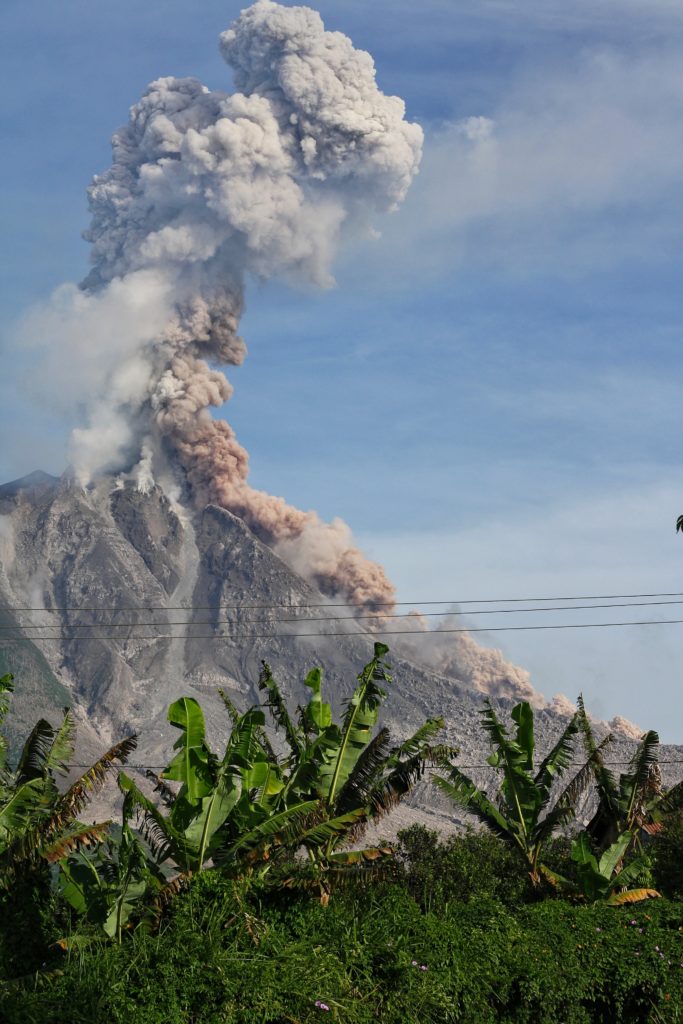
The Gravel You Didn’t Know You Needed

river rocks

Gravel is rock or stone of a size range more than one half inch but less than two and one half inches in diameter. Natural erosion of big stones leads to the formation of gravel as does the banging of bigger rocks rolling down hills and crashing into smaller rocks.

Gravel is a loose mixture of small rocks and pebbles. It is typically between 0.5 and 2.5 inches in diameter. Gravel is formed by the natural erosion of larger rocks. This can happen through weathering, which is the breaking down of rocks by wind, water, and ice. Gravel can also be formed by the action of glaciers, which grind rocks into smaller pieces as they move.

Gravel is a type of rock that is made up of small pieces of other rocks. The pieces of rock in gravel are typically between 0.5 and 2.5 inches in diameter. Gravel can be formed in a number of ways, including through the erosion of larger rocks, the action of glaciers, and the weathering of rocks by wind, water, and ice.

Gravel is a loose, unconsolidated material made up of small, rounded rock fragments. It is typically between 0.5 and 2.5 inches in diameter. Gravel is formed by the weathering and erosion of larger rocks. Weathering is the process by which rocks are broken down by physical and chemical processes. Erosion is the process by which rocks are moved from one place to another by wind, water, ice, or gravity.
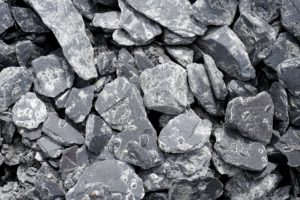
course gravel

But for masonry, construction and road-building crushed stone and gravel are formed by mechanical crushers. Gravel is also used aesthetically as well as natural stone, pebbles and river pebbles are used in paths and gardens. Pea gravel is found in nature buy can be manufactured as well but requires an extensive tumbling process.

Gravel and crushed stone are typically formed by mechanical crushers for masonry, construction, and road-building. Gravel is also used aesthetically, such as natural stone, pebbles, and river pebbles in paths and gardens. Pea gravel is found in nature but can also be manufactured through an extensive tumbling process.

Gravel and crushed stone are natural materials that are often used for a variety of purposes. In masonry, construction, and road-building, they are used as aggregate, which is a material that is mixed with cement to create concrete. Gravel is also used aesthetically, such as in paths and gardens. Pea gravel is a type of gravel that is typically smaller than other types of gravel. It is found in nature but can also be manufactured through an extensive tumbling process.
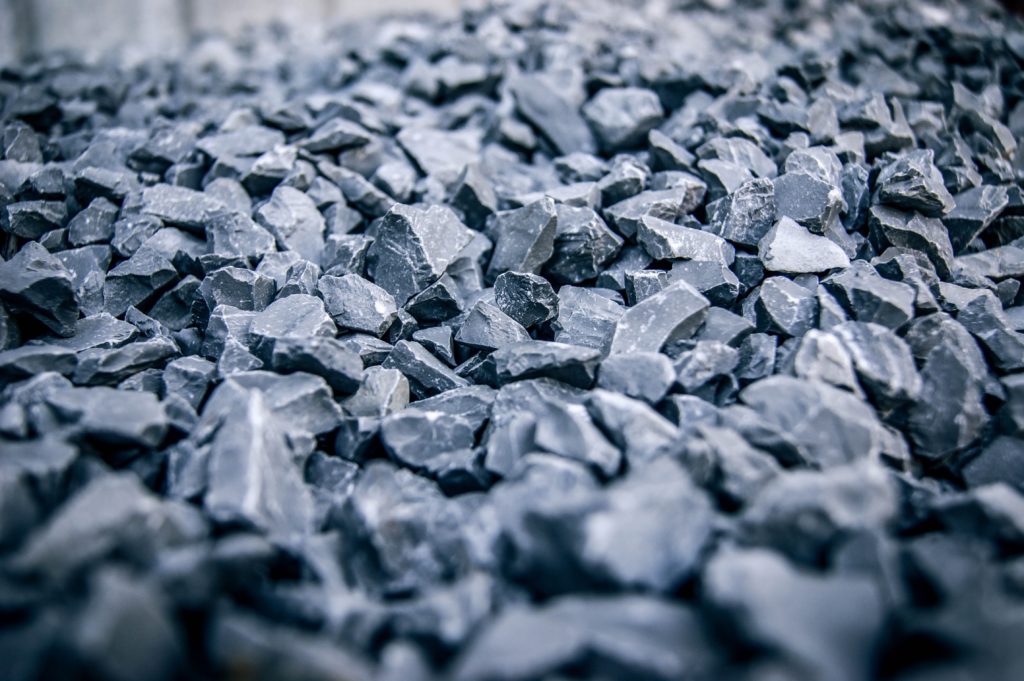
large gravel

If you ever tumbled rocks as a scout, you probably recall that the tumbling and polishing process requires many many hours and days of mechanical stone tumbling. The first step is to collect the rocks. You can find rocks in many places, such as beaches, rivers, and even your own backyard. Once you have collected your rocks, you need to clean them. You can do this by washing them with soap and water or by using a rock tumbler.

A rock tumbler is a machine that uses abrasives to polish rocks. The abrasives are typically made of silicon carbide or aluminum oxide. The rocks are placed in the rock tumbler with the abrasives and water. The rock tumbler then rotates the rocks for a period of time, typically 6-10 days. The longer the rocks tumble, the smoother and more polished they will become.

Once the rocks have finished tumbling, you can use them in a variety of ways. You can display them on a shelf, use them in jewelry, or even make a rock garden. Tumbling rocks is a fun and rewarding hobby that can be enjoyed by people of all ages.

Here are some additional information on collecting the rocks and different ways of using and displaying tumbled rocks:

  • When collecting rocks, it is important to choose rocks that are the same size and shape. This will help to ensure that the rocks tumble evenly.
  • It is also important to choose rocks that are clean and free of dirt and debris. This will help to prevent the rocks from becoming scratched or damaged during the tumbling process.
  • There are many different ways to use and display tumbled rocks. Some popular options include:
    • Displaying them on a shelf or mantel
    • Using them in jewelry, such as necklaces, earrings, and bracelets
    • Making a rock garden
    • Using them as paperweights or doorstops
    • Giving them as gifts

Tumbling rocks is a fun and rewarding hobby that can be enjoyed by people of all ages. It is a great way to get outdoors and explore your surroundings. It is also a great way to learn about rocks and minerals.
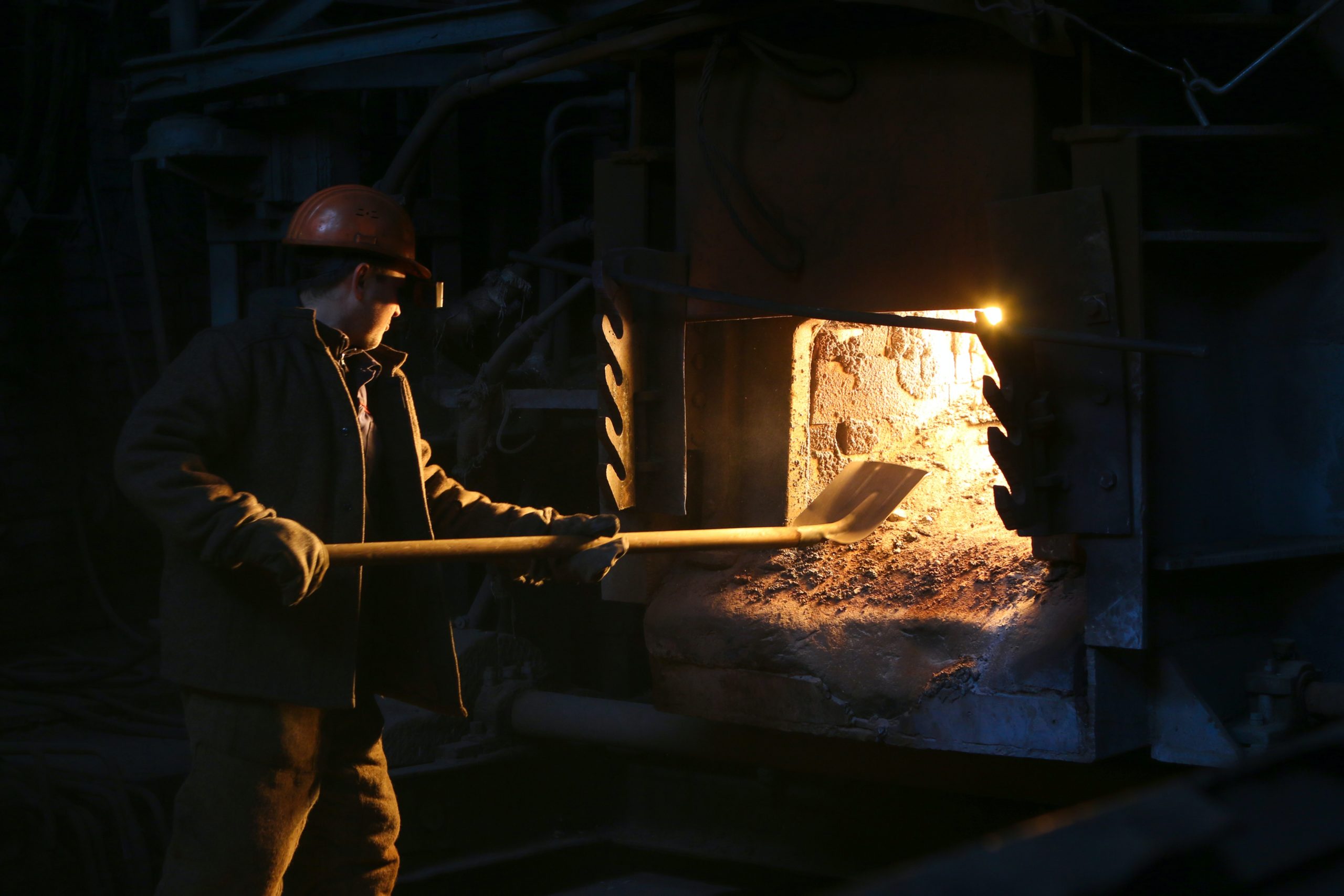
Turning iron into steel

The discovery that a tiny bit of carbon turned iron into steel was a long and gradual process. The first people to make steel were probably the Hittites in Anatolia (modern-day Turkey) around 2000 BC. They found that by adding charcoal to iron ore, they could produce a harder and stronger material than pure iron.

forced air hearth
the Furnace

The Hittites however, probably didn’t understand why adding charcoal to iron ore increased the carbon content to between zero and one percent, and it wasn’t until the 17th century that scientists began to study the properties of steel in more detail.

In the 1660s, the English scientist Robert Boyle found that steel was a mixture of iron and carbon. He also found that the amount of carbon in steel affected its properties. Steel with a higher carbon content was harder and stronger, but it was also more brittle. Steel with a lower carbon content was softer and more ductile, but it was also less strong.

Most famously, the English scientist Henry Bessemer developed a process In the 18th century for making steel that was much faster and cheaper than the traditional methods. This process, known as the Bessemer process, revolutionized the steel industry.

Bessemer Process

Founders had always known that massive air flow to the hearth led to higher temperatures which melted things, like iron and copper, that were hard to melt. It made steel more affordable and accessible, and it led to the development of many new technologies, such as the railroads and the steam engine.

In the 19th century, the German scientist Robert Mushet developed a process for making steel that was even stronger than Bessemer steel. This process, known as the Mushet process, used a combination of iron, carbon, and manganese to create a steel that was both strong and tough.

In the 20th century, the development of new steelmaking technologies, such as the open-hearth furnace and the electric arc furnace, led to the production of even higher-quality steel. Today, steel is an essential material in many industries, and it is used to make everything from cars and buildings to bridges and airplanes.

The discovery that a tiny bit of carbon turned iron into steel was a major breakthrough in the history of technology. It led to the development of many new technologies and industries, and it has had a profound impact on the world we live in today.

The discovery that a tiny bit of carbon turned iron into steel was a long and gradual process. The first people to make steel were probably the Hittites in Anatolia (modern-day Turkey) around 2000 BC. They found that by adding charcoal to iron ore, they could produce a harder and stronger material than pure iron. However, they didn’t understand why this worked, and it wasn’t until the 17th century that scientists began to study the properties of steel in more detail.

In the 1660s, the English scientist Robert Boyle found that steel was a mixture of iron and carbon. He also found that the amount of carbon in steel affected its properties. Steel with a higher carbon content was harder and stronger, but it was also more brittle. Steel with a lower carbon content was softer and more ductile, but it was also less strong.

In the 18th century, the English scientist Henry Bessemer developed a process for making steel that was much faster and cheaper than the traditional methods. This process, known as the Bessemer process, revolutionized the steel industry. It made steel more affordable and accessible, and it led to the development of many new technologies, such as the railroads and the steam engine.

In the 19th century, the German scientist Robert Mushet developed a process for making steel that was even stronger than Bessemer steel. This process, known as the Mushet process, used a combination of iron, carbon, and manganese to create a steel that was both strong and tough.

In the 20th century, the development of new steelmaking technologies, such as the open-hearth furnace and the electric arc furnace, led to the production of even higher-quality steel. Today, steel is an essential material in many industries, and it is used to make everything from cars and buildings to bridges and airplanes.

The discovery that a tiny bit of carbon turned iron into steel was a major breakthrough in the history of technology. It led to the development of many new technologies and industries, and it has had a profound impact on the world we live in today.

It is difficult to say exactly when man discovered the hearth where forcing more air flow could melt stuff. However, it is likely that this discovery was made sometime in the Neolithic period, when humans began to develop more sophisticated methods of cooking and metalworking.

The first hearths were probably simple pits dug into the ground and lined with stones. These hearths would have been used to cook food over an open fire. However, it is likely that people soon realized that by blowing air into the fire, they could make it hotter and more efficient. This would have allowed them to melt metals such as copper and bronze, which were essential for making tools and weapons.

The development of the hearth was a major breakthrough in human history. It allowed people to cook food more easily and efficiently, and it also opened up the possibility of metalworking. These advances had a profound impact on human development, and they helped to lay the foundation for the modern world.

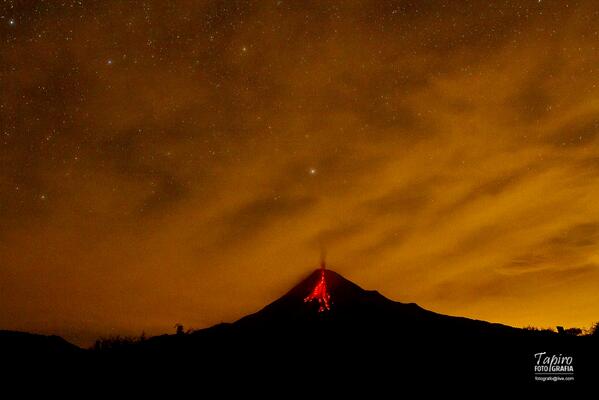
Big Colima, the nubile Mexico Volcano

Colima is perhaps the most potentially dangerous volcano in Mexico. 300 miles west of Mexico City and 75 miles south of Guadalajara, Colima rises 12,500 feet and last really blew in 1913, but the eruption only lasted four days and was mostly comprised of smoke, ash and loud bangs. A 2005 eruption was quieter but sent lava bombs and pyroclastic flows up to two miles from the cone.

Only 5 million years old, geologists have found that one such landslide less than one million years ago reached the Pacific Ocean more than 50 miles away. Colima is stereotypical with a cone rising to its apex that fills with lava and spills over leading to a handful of lava flows in the last 50 years. The last 50 years have been less explosive, but scientists believe Colima may be returning to a more explosive period than was typical in the last five to six decades. Prior to 1961 Colima had four decades of dormant behavior.

A December 2013 image of the lava flow from the cone 

http://www.volcanodiscovery.com/colima/news/39827/Colima-volcano-Western-Mexico-activity-update-explosions-and-lava-flows.html

Volcano eruption

Colima has not erupted since July 2019. However, there has been some activity in the past few months. In February 2023, there was an increase in seismic activity and the volcano released a small amount of ash. In March 2023, there was another increase in seismic activity and the volcano released a larger amount of ash. The volcano is currently in a state of unrest and scientists are monitoring it closely.

The Colima Volcano is located in the Trans-Mexican Volcanic Belt, which is a chain of volcanoes that runs along the west coast of Mexico. The volcano is one of the most active in Mexico and has erupted numerous times over the past few centuries. The most recent major eruption occurred in 1913, when the volcano spewed ash and lava for several days.

The Colima Volcano is a popular tourist destination, but it is important to remember that it is a dangerous place. The volcano is constantly monitored by scientists and there are warning systems in place to alert people in the event of an eruption. However, it is still possible for people to be injured or killed in an eruption.

If you are planning to visit the Colima Volcano, it is important to be aware of the risks and to take precautions.

GRBs, long duration Gamma Ray Bursts

Inconsistencies with current theories.

  1. At 10-50 times the size of the sun, the object was smaller than expected.
  2. At 3.8 billion light-years away, the object was closer than expected.
  3. At 20 hours, the duration was far longer than what was thought possible.
gamma rays

GRB’s, or gamma-ray bursts, are blasts of gamma-ray radiation that have been categorized as short duration and long duration, with the dividing point being around two seconds.

Scientists have decided that the brightness of the event can be explained by the direction nature, rather than radiating in a spherical pattern, GRB’s radiate in a north and south pole pattern.

Detected in April, 2013, the event was named GRB 130427A and lasted 20 hours. We suppose the cause to be a star that exhausted its store of hydrogen, fused into helium and other elements, exploding then collapsing to form a black hole.

Nuclear Fusion – Wikipedia

Other October, 2013 observations found remnants of a supernova at GRB 130427A’s location. The evidence pointed to the explosion of a star with at least 20 to 30 times the sun’s mass.

Prior observations have always been of much ‘older’ bursts, but we first became aware of GRB’s in 1967 when an early satellite used to detect nuclear explosions on earth surprised observers with GRB’s from outer space.

Scientists build increasingly ‘swift’ and directional equipment to detect gamma-ray bursts. Little history has been de-classified on the geo-political reactions, but most accounts describe that the event was anomolous with typical nuclear tests and quickly discounted as evidence of a terrestrial thermo-nuclear blast.

Brown dwarf stars

Just 6.5 light-years away, a pair of brown dwarf stars have been documented. The sun is less than ten minutes from earth, but our solar system extending to belts of comets and asteroids might have a diameter of a light-year.

Now we have discovered the closest star system discovered since 1916. WISE J104915.57-531906 is the third-closest star system to Earth after Alpha Centauri (4.4 light-years away) and Barnard’s star (6 light-years away). Brown dwarfs are often referred to as “failed stars” because they are too small and generate gravity shy of what is needed to produce the pressures needed to cause hydrogen fusion.

WISE is a designation for Wide-field Infrared Survey Explorer, a kind of telescope used by scientists to survey the night sky. Scientists had thought there were larger quantities of brown dwarfs, but this WISE system has put real numbers on their postulates.

Younger Dryas

The Younger Dryas was a period of abrupt climate change that occurred approximately 12,900 to 11,700 years ago. It was a relatively brief period of about 1,200 years, during which the Earth’s climate shifted from a relatively warm interglacial period to a much colder and drier climate, before returning to a warmer climate again. The Younger Dryas is named after a cold-tolerant wildflower called Dryas octopetala, which thrived in the cold conditions of that time.

Turkey Burger

During the Younger Dryas, the ocean levels were lower than they are today. This is because a significant portion of the Earth’s water was locked up in ice sheets and glaciers, which grew during this cold period. As a result, sea levels were approximately 100 meters (330 feet) lower than they are today, which meant that coastlines were in different locations compared to today.

The lower sea levels also exposed a land bridge between Asia and North America, known as Beringia, which allowed human and animal migrations between the two continents. The lower sea levels also exposed new coastlines and created new habitats for marine life, which adapted to the changing environment.

Woolly mammoths lived until the end of the Younger Dryas. They were one of the many large mammals that roamed the Earth during this time. The woolly mammoth was well adapted to the cold climate of the Younger Dryas, with a thick coat of fur and a layer of fat to insulate them from the cold.

Woolly mammoths were large and heavy animals, with males being significantly larger than females. On average, adult males stood about 3.3 meters (10.8 feet) tall at the shoulder and weighed between 6,800 to 8,000 kg (15,000 to 18,000 pounds), although some exceptionally large individuals may have weighed up to 12,000 kg (26,000 pounds).

Females were slightly smaller, standing about 2.7 meters (8.9 feet) tall at the shoulder and weighing between 3,000 to 4,500 kg (6,600 to 9,900 pounds).

The size and weight of woolly mammoths varied depending on the geographic location and the availability of food, as well as other factors such as age and sex. Nonetheless, woolly mammoths were one of the largest mammals of the Ice Age, and their impressive size and strength helped them to survive in some of the harshest environments on Earth.

Australia Comet Impact

Younger-Dryas

Cepheid variables

Cepheid variable pulsating stars and light years distance

Standard Candles, Cepheid Variables and the expanding universe

The correlation between a Cepheid variable’s brightness and the period of its peak and trough of brightness makes this kind of star a standard candle for distance approximation in the universe.Types of Cepheids include Classical Cepheids (Population I Cepheids, Type I Cepheids, or Delta Cephei variables), Type II Cepheids (Population II Cepheids), Anomalous Cepheids, and Dwarf Cepheids.

Classical Cepheids are between four and ten times the size of the Sun and pulsate during a period ranging from days to months.

Type II Cepheids exhibit a pulsation ranging from a day to two months. Usually smaller than the Sun and metal poor.

Edward Pigott in 1784 documented the pulsation of Eta Aquilae, a Classical Cepheid variables. But the standard example is Delta Cephei, documented by John Goodricke shortly thereafter.

Edwin Hubble postulated standard candle distances to the Andromeda Galaxy in 1924. In this time, astronomers still struggled with the difference between the Milky Way and the possibility of a larger universe.

In 1929, Hubble published more research theorizing an expanding universe, based on Cepheid variable measurements in many more galaxies.

What is the speed of gravity

what experiment confirmed the existence of gravitational waves?
Gravity

The first direct detection of gravitational waves was made by the Laser Interferometer Gravitational-Wave Observatory (LIGO) in 2015. This groundbreaking discovery confirmed a major prediction of Albert Einstein’s theory of general relativity and opened up a new field of astronomy, allowing us to study the universe in a completely new way. The detection was made by observing the minute distortions in space-time caused by the passage of a gravitational wave from the collision of two black holes over a billion light-years away. This discovery was widely regarded as one of the most important scientific breakthroughs of the century and has been recognized with several awards, including the 2017 Nobel Prize in Physics.

what ALL experiments have we done to detect gravitational waves?
Gravity

The detection of gravitational waves has been carried out by various experiments, most notably the Laser Interferometer Gravitational-Wave Observatory (LIGO). LIGO uses laser interferometry to detect extremely small distortions in space-time caused by the passage of gravitational waves. Another experiment, the Virgo interferometer, has also detected gravitational waves. These detections have been made possible by the extremely precise measurements of the distance between mirrors, which are affected by the passing gravitational waves. The collaboration between LIGO and Virgo has allowed for more accurate localization of gravitational wave sources in the sky.

have we learned yet at what speed of gravitational waves travel?

The speed of gravitational waves is equal to the speed of light, approximately 299792458 meters per second. This has been confirmed by numerous experiments and observations, including the detection of gravitational waves from merging black holes and neutron star.

Isaac Newton

Isaac Newton discovered that all objects with mass are attracted to each other. This force of attraction is called gravity. The more mass an object has, the stronger its gravitational pull. The distance between two objects also affects the strength of the gravitational force. The farther apart two objects are, the weaker the gravitational force.

Newton’s discovery of gravity was a major breakthrough in physics. It helped to explain why objects fall to the ground, why the planets orbit the sun, and why the moon orbits the Earth. Newton’s law of universal gravitation is still used today to calculate the orbits of planets, satellites, and other objects in space.

Here is a more mathematical explanation of Newton’s law of universal gravitation:

F = G * (m1 * m2) / r^2

Where:

  • F is the force of gravity between two objects
  • G is the gravitational constant (6.67408 × 10^-11 N m^2 kg^-2)
  • m1 and m2 are the masses of the two objects
  • r is the distance between the centers of the two objects

Newton’s law of universal gravitation is one of the most important laws in physics. It has helped us to understand the motion of objects in the universe and has led to many advances in science and technology.

Albert Einstein

Albert Einstein learned that gravity is not a force, but rather a curvature of spacetime. Spacetime is the fabric of the universe, and it is made up of space and time. The presence of mass or energy curves spacetime, and this curvature is what we experience as gravity.

curvature

Einstein’s theory of general relativity is a much more comprehensive theory of gravity than Newton’s law of universal gravitation. It has been tested in many different ways, and it has always passed with flying colors. General relativity has helped us to understand many things about the universe, including the expansion of the universe, the existence of black holes, and the bending of light around massive objects.

Here are some of the things that Einstein learned about gravity:

  • Gravity is not a force, but rather a curvature of spacetime.
  • The more mass an object has, the more it curves spacetime.
  • The curvature of spacetime is what causes objects to fall towards each other.
  • The curvature of spacetime also affects the path of light.
  • Black holes are regions of spacetime where the curvature is so strong that nothing, not even light, can escape.
  • The expansion of the universe is caused by the curvature of spacetime.

Einstein’s theory of general relativity is one of the most important and successful theories in physics. It has helped us to understand the universe in a much deeper way, and it has led to many advances in science and technology.